Painted Into a Corner: Who Really Decides What Your House Looks Like?
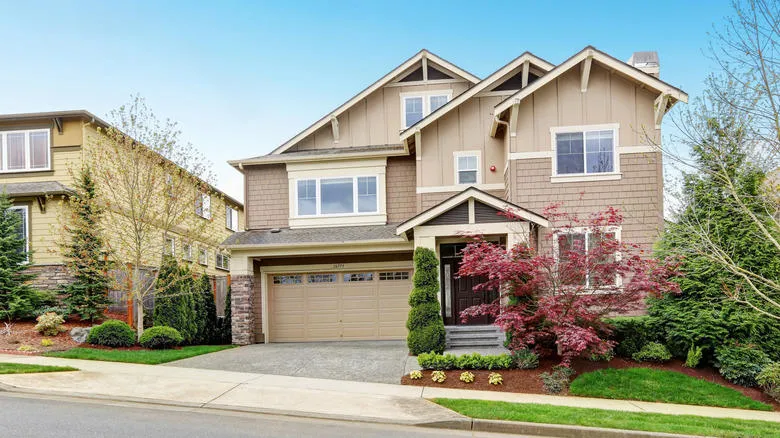
Photo: suburban neighborhood HOA houses uniform beige exterior paint colors, via img-s-msn-com.akamaized.net
Every spring, in planned communities across America, a peculiar ritual unfolds. Homeowners submit paint chips to volunteer boards. Boards deliberate over greige versus slightly-warmer greige. Professional painters, caught in the middle, quote jobs they know will be revised twice before a single brush touches siding. And the neighborhoods that result look, from the air, like a single developer ran out of imagination somewhere around 2004.
The question worth asking is not whether HOAs have the legal authority to regulate exterior colors — they plainly do. The question is whether they should, and whether the palettes they enforce are actually serving the property values they claim to protect.
The Curb Appeal Paradox
The stated rationale for color restrictions is always the same: consistency protects values. But ask any professional color consultant what actually drives curb appeal, and the answer is rarely uniformity. It is coherence — a sense that each home relates to its neighbors without imitating them. The most photographed residential streets in America, from Charleston's Rainbow Row to the painted ladies of San Francisco, are celebrated precisely because of color, not despite it.
Restrictive palettes produce the opposite of coherence: they produce monotony with occasional exceptions granted to well-connected applicants. A street of fifteen nearly identical beige houses does not read as harmonious. It reads as unfinished. Real estate photographers know this; that is why listing agents in restricted communities so often shoot at dusk, when muted exterior palettes recede and warm interior light does the selling.
What Professional Painters See From the Ladder
Painters who work across multiple communities — including crews trained in markets like Riyadh, where entire districts coordinate their facades around shared desert-toned palettes that still permit bold door and trim accents — observe something American boards frequently miss. Coordination does not require duplication. The strongest coordinated streetscapes establish a neutral field and then allow individual expression at defined points: front doors, shutters, porch ceilings. The field provides the harmony; the accents provide the life.
Boards that regulate everything regulate nothing well. Boards that regulate the field and liberate the accents get streets that photograph well, age well, and — crucially — attract buyers who can picture themselves living there.
The Enforcement Problem Nobody Budgets For
There is also a quieter cost. When a palette is so narrow that every repaint looks like every other, homeowners delay repainting. A faded, chalky beige house in a beige neighborhood attracts no attention, so it gets no attention — for years. Deferred maintenance is a far greater threat to property values than a bold front door ever was. Communities that permit visible, appealing color choices create a social incentive to maintain: your house looks good, so the neighbor's looks tired, so the neighbor repaints.
A Modest Proposal for Boards
The fix is not abolition. Communities have legitimate interests in preventing genuine extremes — neon, unprimed, or peeling paint harms everyone. The fix is smarter rules:
- Regulate sheen and condition, not just hue.
- Pre-approve a range rather than a list, including a defined accent palette for doors and trim.
- Require decisions within 30 days, with silence constituting approval.
- Consult the professionals who actually have to execute the palette. Painters and color consultants see which combinations fail, fade, and fight — boards mostly see renderings.
Homeownership in a planned community will always involve negotiation between personal expression and shared standards. But a standard so restrictive it erases the individuality of the homes it governs is not protecting value. It is merely standardizing decline. The homeowners, the boards, and the painters holding the brushes all deserve better than a palette assembled from fear.